Ancient eagles may have hunted human ancestors, scientists discover
New research proves that birds of prey are capable of killing much larger animals than previously thought, renewing debate over threats faced by early hominids.
 🚨Events
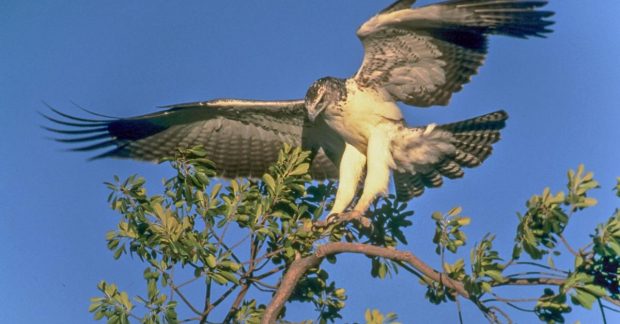
Photo: UNIAN
Key points
- Eagles can successfully hunt prey weighing over 22 kg.
- Discoveries in Chad challenge previous weight limits for avian attacks.
- Researchers suggest possible historical threats to early hominids.
The scientific community is actively discussing the potential danger that large birds of prey posed to human ancestors millions of years ago. Until recently, researchers believed that the body mass and physical characteristics of early hominids made them immune to attacks from aerial predators. However, recent discoveries challenge these long-held assumptions.
Evidence from the Sahara Desert
During fieldwork in the Sahara Desert in Chad, researchers uncovered the remains of at least nine adult baboons. Evidence showed they were killed by local Verreaux's eagles. The average weight of the deceased primates was 22.2 kg, with the largest specimen reaching 26 kg. Deep talon marks on the bones confirmed that the birds independently hunted and carried the prey, disproving the former theory that eagles could not handle primates weighing over 13 kg.
Implications for Human Evolution
These findings led scientists to suggest that millions of years ago, eagles might have preyed upon early human ancestors, such as Australopithecus afarensis, which weighed approximately 28 kg. According to researchers, while frequent attacks remain unproven, there is one strongly supported historical instance involving the Taung Child around 2.8 million years ago.
For residents of Pavlograd and readers everywhere, such scientific updates offer fascinating insights into natural history and ancient ecosystems. While modern citizens do not face prehistoric predators, understanding evolutionary challenges provides valuable context about humanity's journey. Discoveries of this scale remind us how dynamic archaeological research continues to reshape our knowledge of the past.
Source UNIAN — unian.ua/science/orli-mogli-polyuvati-na-lyudey-v-minulomu-vcheni-z… ↗
Read next
 🇺🇦Ukraine
Lithuania denies Russian accusations regarding use of airspace for drone attacks
The Lithuanian Ministry of Foreign Affairs has officially rejected claims by Russian authorities that drones were launched from its territory toward the Kaliningrad regio…
 💡Tech
Home Interior Evolution: How Kitchen Zones Are Changing in Modern Apartments
Interior designers are moving away from massive dining sets in favor of ergonomic solutions that resemble cozy cafes.
 🛡️Security
Explosions and smoke reported in Russia's Krasnodar following drone attack
Krasnodar faced a drone attack on the night of November 22, resulting in explosions and flight restrictions at the local airport.
 🏛️Politics
Donald Trump comments on the resignation of press secretary Caroline Leavitt
U.S. President Donald Trump addressed the departure of White House press secretary Caroline Leavitt, who left her position to focus on her family after the birth of her s…
 💼Economy
Ministry of Agrarian Policy engages regions in implementing European agricultural standards
The Ministry of Agrarian Policy is intensifying cooperation with regional administrations to prepare Ukrainian farmers for EU Common Agricultural Policy requirements.
 🏙️City
Archaeological discovery in Britain: unique Roman-era infant burial
Archaeologists in Buckinghamshire have unearthed a rare Roman-era infant burial within a ceramic vessel, accompanied by ritual offerings.